FOREIGN WORKER COMPLIANCE
Malaysia’s foreign worker levy in 2026: what does it actually cost you?
Every foreign worker on your payroll carries an annual levy on top of wages — before EPF, SOCSO and immigration paperwork are even added in. Here is exactly what it costs by sector and region, what changes with the incoming Multi-Tier Levy, and where the real total lands.
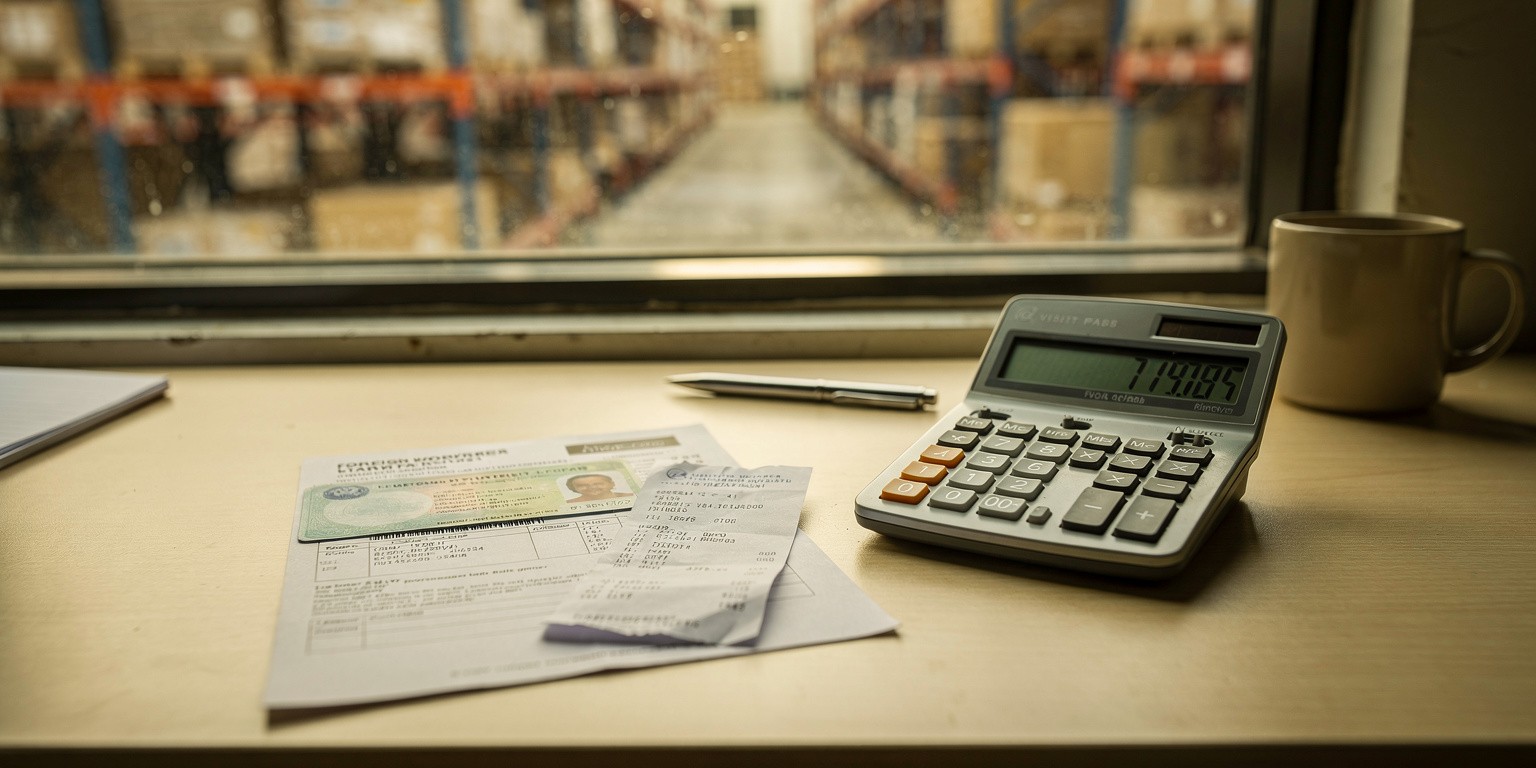
Malaysia’s foreign worker levy is an annual charge employers pay per foreign worker, on top of wages: RM1,850 a year in Peninsular Malaysia for manufacturing, construction and services, RM640 for plantation and agriculture, with lower rates in Sabah and Sarawak. A Multi-Tier Levy Model due in 2026 will raise it further for foreign-labour-reliant firms.
- The employer's obligation, not a wage deduction. Paid annually per foreign worker to the Immigration Department (JIM), on top of the RM60 VP(TE) and RM125 visa processing fees.
- RM1,850/year in Peninsular Malaysia for manufacturing, construction, services and mining; RM640/year for plantation and agriculture. Sabah and Sarawak pay less (RM410–RM1,490), though Sarawak adds a further RM1,854 FWTA surcharge on top, per one levy guide's breakdown.
- A Multi-Tier Levy Model (MTLM), delayed from 2025, is due in 2026 under the 13th Malaysia Plan — it will raise levies for employers most reliant on foreign labour, and had not been gazetted as of this writing.
- The levy sits on top of, not instead of, EPF and SOCSO for foreign workers — 2% EPF (both sides) since October 2025, plus 1.75% employer SOCSO. EIS is the one scheme foreign workers are excluded from.
- Malaysia's registered foreign workforce fell 13% to 2.13 million in the year to October 2025, as the government pushes toward cutting dependency to 10% of the workforce by 2030.
Weighing up a foreign hire against a Malaysian permanent placement? WhatsApp Carriera and we will help you compare the real all-in cost.
For employers in logistics, warehousing and manufacturing — three sectors most reliant on foreign labour, and three Carriera places permanent candidates into — the levy itself is rarely what surprises finance. It is fixed, published and easy to budget for. What catches employers out is everything layered on top: EPF and SOCSO obligations that only became mandatory for foreign workers in the last two years, plus a levy model due to change again in 2026.
What is the foreign worker levy, and who pays it?
What is Malaysia’s foreign worker levy?
The foreign worker levy is an annual charge a Malaysian employer pays for each foreign employee it holds a valid Visit Pass (Temporary Employment) — VP(TE) for, set and collected by the Immigration Department of Malaysia (JIM). It recurs every renewal, and it is never deducted from the worker's own pay — the obligation and the payment both sit with the employer.
On top of the levy itself, JIM charges a flat RM60 processing fee for the VP(TE) and a further RM125 for the visa, regardless of sector or region, per the Immigration Department's published schedule. Those fees stay flat no matter which sector rate applies below — only the levy itself varies by sector and region.
How much is the levy in 2026?
How much is the foreign worker levy in Malaysia in 2026, by sector and region?
The flat annual rates below have applied through 2025 and remain in force for 2026, pending the Multi-Tier Levy Model discussed in the next section:
| Sector | Peninsular Malaysia | Sabah & Sarawak |
|---|---|---|
| Manufacturing | RM1,850 | RM1,010 |
| Construction | RM1,850 | RM1,010 |
| Services | RM1,850 | RM1,490 |
| Mining & quarrying | RM1,850 | Not published |
| Plantation | RM640 | RM590 |
| Agriculture | RM640 | RM410 |
Source: Immigration Department of Malaysia. All figures are annual, per worker.
Sarawak employers should budget for more than the table above shows: state authorities add a further RM1,854 Foreign Workers Transformation Approach (FWTA) surcharge on top of the base Sarawak rate, not instead of it, per kospekerja.com's levy guide — roughly doubling the effective per-worker levy for a Sarawak manufacturer against the headline RM1,010 figure. Mining and quarrying sit in the same RM1,850 Peninsular band as manufacturing; plantation and agriculture carry the lowest rate nationally, reflecting the sector's traditionally tighter margins.
The Multi-Tier Levy Model, and the dependency push behind it
What is the Multi-Tier Levy Model (MTLM), and when does it take effect?
The Multi-Tier Levy Model (MTLM) replaces today's flat, sector-wide rate with one that scales to how reliant a company is on foreign labour — the higher a firm's ratio of foreign to local workers, the higher its per-worker levy climbs. It was originally slated for 2025 but was pushed back; the 13th Malaysia Plan now confirms 2026 implementation, following stakeholder engagement the Human Resources Ministry ran through 2025. As of this writing it had not yet been gazetted, so the flat rates in the table above remain the ones to budget against.
The policy goal behind MTLM is explicit: push employers toward automation and local hiring instead of foreign headcount. The government's stated target is to cut foreign workers to 10% of the national workforce by 2030, and 5% by 2035 — down from a current cap of 15% under the 12th Malaysia Plan, per Bernama's reporting of the government's figures.
Is the dependency reduction actually happening?
By the numbers, yes. Malaysia had 2,132,578 legally registered foreign workers as of 15 October 2025, a 13% drop from 2,452,010 the year before, according to Bernama.
“[The decline] reflects the government's continued efforts to reduce dependence on foreign labour across all economic sectors,” said Deputy Human Resources Minister Datuk Seri Abdul Rahman Mohamad, per Bernama's report on the October 2025 figures.
The practical read for employers: this is a multi-year policy with published 2030 and 2035 targets, not a one-off announcement, and MTLM is designed specifically to make foreign-labour-heavy operating models progressively costlier. Budgeting only against today's flat levy, with no plan for what MTLM adds, is the real risk.
EPF, SOCSO and the real cost of a foreign hire
What does a foreign worker cost beyond the levy itself?
Two statutory schemes that used to apply only to Malaysian employees now apply to foreign workers too, and both changed within the last two years:
EPF (KWSP) became mandatory for non-Malaysian citizen employees — excluding domestic workers — from wages paid in October 2025. Both employer and employee contribute 2% of monthly wages each, per Skrine's summary of the EPF announcement. Before this, EPF contribution for foreign workers was optional.
SOCSO (PERKESO) now applies more broadly too. The long-standing Employment Injury Scheme covers foreign workers at an employer-only 1.25%. Since 1 July 2024, the Invalidity Scheme extended to foreign workers as well, adding a further 0.5% from the employer and 0.5% from the employee, per Vialto Partners' regional tax alert. Combined, that puts the employer's SOCSO share for a foreign worker at 1.75%, matching PERKESO's own published First Category combined rate (1.75% employer, 0.5% employee) that a Malaysian employee's contribution already carries.
One scheme does not apply: EIS is limited to Malaysian citizens and permanent residents, per PERKESO's published eligibility criteria — a foreign worker on a Visit Pass is outside its scope, unlike EPF and SOCSO.
| On-cost (% or RM, on top of wage) | Malaysian employee | Foreign worker |
|---|---|---|
| EPF | 13% employer (wages ≤ RM5,000) | 2% employer + 2% employee (from Oct 2025) |
| SOCSO | 1.75% employer | 1.75% employer (1.25% EI + 0.5% Invalidity) + 0.5% employee |
| EIS | 0.2% employer + 0.2% employee | Not applicable |
| HRD Corp levy | 1% employer (10+ staff) | 1% employer (10+ staff) |
| Annual government levy | — | RM640–RM1,850/year |
Malaysian-employee figures per Carriera's cost-of-hiring guide; foreign-worker figures per the sources cited above. HRD Corp levy applies identically once headcount crosses the threshold, regardless of citizenship.
The comparison matters most for employers who assume a foreign hire is simply "wages minus EPF/SOCSO". It is not — the on-costs on both sides of the table are now broadly comparable in structure, and the annual levy is a cost a Malaysian hire never carries at all.
Does the levy ever get cheaper?
Does the foreign worker levy fall if I keep the same worker for years?
Yes, but only after a decade. Since 30 April 2019, extending a foreign worker's VP(TE) into its 11th, 12th or 13th year of service carries a reduced levy of RM500 a month (RM6,000 a year) — a single flat rate that applies across Peninsular Malaysia, Sabah, Sarawak and Labuan alike, per the Master Builders Association Malaysia (MBAM). A processing fee of RM125 still applies per application.
For most sectors, RM6,000 a year is actually higher than the standard Peninsular rate of RM1,850 — so this "reduction" mainly benefits long-tenured workers in Sabah or Sarawak, not Peninsular manufacturing or services.
Does Carriera handle levy or work permits?
Does Carriera process foreign worker levy payments or permits?
No — levy payments, VP(TE) applications and immigration paperwork stay between the employer, JIM and any licensed agent handling that process; Carriera does not process them.
Where we do help: if the levy, EPF and SOCSO stack above is pushing you to reconsider a foreign-labour role in favour of a permanent Malaysian hire, our recruitment team can source that candidate — we have placed talent for 50+ companies across sectors including logistics & freight, manufacturing and wholesale & distribution — the sectors most exposed to the rates above. And if the answer is to upskill your existing local workforce instead, Carriera Academy is an HRD Corp Approved Training Provider; see our training catalogue.
Still have questions?
Foreign worker levy — employer FAQ
Is the foreign worker levy paid by the employer or deducted from the worker's wages?
How much is the foreign worker levy in Malaysia in 2026?
What is the Multi-Tier Levy Model (MTLM) and when does it start?
Does the foreign worker levy go down the longer I employ the same worker?
What other statutory costs come with employing a foreign worker in Malaysia?
Does Carriera handle foreign worker levy payments or work permits?
Sources: levy rates by sector and region per the Immigration Department of Malaysia (JIM); Sarawak FWTA surcharge per kospekerja.com; Multi-Tier Levy Model timeline per Free Malaysia Today; foreign-workforce headcount, dependency targets and the Deputy Minister's quote per Bernama; EPF mandatory-contribution rules per Skrine; SOCSO Invalidity Scheme extension per Vialto Partners, cross-checked against PERKESO's own published contribution rates; EIS eligibility per QuickHR; long-tenure levy reduction per the Master Builders Association Malaysia. Verified 7 July 2026; this article is general information, not legal or tax advice.
Weighing up a foreign hire against a Malaysian permanent placement?
Tell Steph your sector and headcount, and we will help you compare the real all-in cost — levy, EPF, SOCSO and all — against a permanent local hire.
WhatsApp Carriera →